Pillar 01
Enterprise Transformation
Operational AI for enterprise systems. Converting decades of ERP, WMS, and SCM investment into AI-driven decisions — without pilot theater, without rip-and-replace, without governance debt.
Socradata was founded on a thesis most of the market still resists: operational AI requires deep technical capability and genuine domain knowledge in the same room. Consultancies bring frameworks without engineers. AI boutiques bring engineers without operators. System integrators bring integration without decision science. We built a practice that holds all three — and holds itself to the standard of production, not demonstration.
The name joins the Socratic method with the discipline of data. Socrates did not lecture; he examined. He tested every claim against questions until it either survived or collapsed. That is precisely the posture an enterprise should take toward its own models: no forecast, no anomaly score, no recommendation earns a place in an operational workflow until it has answered the hard questions — what decision does it change, which KPI proves it, who owns the override, and what happens when it is wrong.
Most analytics vendors sell answers. We institutionalize the questioning. Every engagement begins by naming the operational decision at stake and the measurement that will adjudicate it — before any technology is selected. That sequence, KPIs before APIs, is not a slogan. It is the firm's founding method, encoded in its name.
So what: the name is the method — evidence under examination, not technology on display.
Socradata is an AI and advanced analytics firm headquartered in Buenos Aires and extended to New York — LATAM-anchored, US-facing. We do not replace the platforms our clients already run. We build the intelligence layer on top of them.
Enterprises, innovators, and governments generate operational data at industrial scale — through ERP, WMS, and supply chain platforms, through innovation portfolios, through city service systems. Very few decide with it. The gap between generating data and deciding with it is where Socradata operates: forecasting, anomaly detection, predictive risk modeling, and decision support embedded directly into the workflows where operators, executives, and public officials already work.
The practice runs in three pillars, each with its own buyer, procurement logic, and standard of accountability — bound by one shared discipline of measurement and governance.
Operational AI for enterprise systems. Converting decades of ERP, WMS, and SCM investment into AI-driven decisions — without pilot theater, without rip-and-replace, without governance debt.
Where emerging technologies are tested, broken, and made operational. Structured exploration on graduate-or-kill terms for innovation leaders accountable for optionality and learning.
Digital transformation for cities, public services, and the academy — AI and data adoption accountable to citizens, designed with a governance backbone rather than vendor-led modernization.
So what: one firm, three audiences, a single operating discipline — production-grade outcomes, governance before deployment, from pilot to policy.
Every Socradata engagement ships with a model card, an evaluation suite, and a documented rollback path — whether the client is a warehouse operator, an innovation lab, or a municipal government. That consistency is the product of three principles applied without exception.
Measurement design precedes technology selection. The operational decision and the KPI that proves it are named before a single integration is scoped.
A pilot that does not name its route to production is theater. We institutionalize what a proof-of-concept only suggests — through governance, MLOps, and named ownership.
Technical and institutional interoperability are preconditions, not features. We integrate through approved interfaces and write the escalation paths before the models ship.
Socradata is led by a principal who runs research, teaching, and delivery as a single feedback loop: research informs delivery, delivery sharpens teaching, and teaching disciplines research.
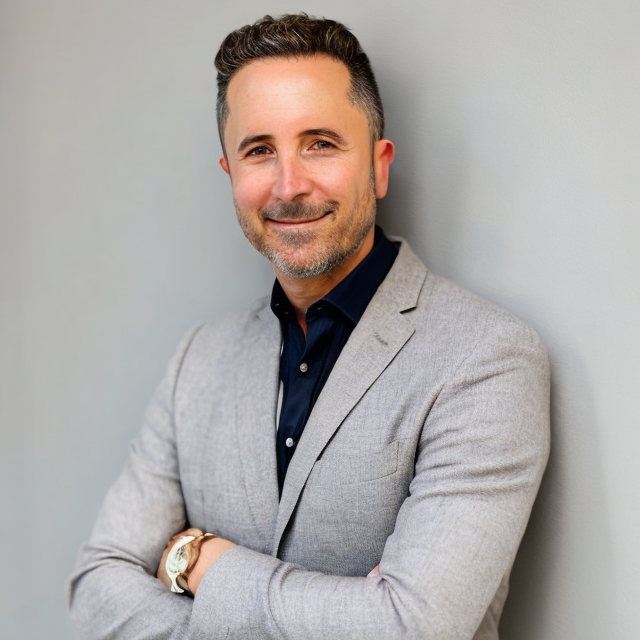
Sergio Mastrogiovanni builds AI inside the systems enterprises actually run on — ERP, WMS, and control towers — and writes about how to govern it. His work sits deliberately at the intersection of three roles that most professionals treat as alternatives: founder and principal consultant at Socradata, postdoctoral researcher at IAE Business School in Buenos Aires, and adjunct professor at New York University, where he has taught graduate courses on intelligent automation, AI, and digital transformation at the School of Professional Studies since 2018.
At Socradata, his practice spans predictive inventory and demand optimization, warehouse and logistics intelligence, supply chain risk and visibility, and AI copilots embedded in enterprise workflows. The engagements are held to a production standard: representative outcomes include fifty million dollars in prevented inventory write-offs at a retail distributor, a thirty-five percent operational efficiency gain in warehouse picking and labor, and a fifteen percent forecast-error reduction sustained across three planning cycles.
At IAE Business School, his research stream examines data-driven urbanism and smart cities, anchored in Buenos Aires and the broader Latin American region. In 2025 he presented four peer-reviewed papers through the IEOM Society — in Singapore, Rabat, Orlando, and at the World Congress in Canada — on AI-driven data governance, urban transformation frameworks for the Global South, and participatory AI design in the public sector, and contributed a chapter on digital transformation in Latin American cities to the edited volume Strategy and Leadership for Grand Societal Challenges. His speaking record includes a featured presentation at the United Nations Headquarters for World Cities Day 2025 and op-eds in Forbes Argentina, Infobae, BAE Negocios, and Ámbito. He works in English and Spanish.
The three roles are not parallel tracks; they are one practice. Frameworks are stress-tested in peer review before they meet a client. Findings from anonymized engagements feed the research, and the research feeds the next engagement. His full record — talks, publications, press, and speaking topics — is maintained at his personal site.
So what: when the person who signs the roadmap also defends it in peer review and teaches it in the classroom, the incentive to ship theater disappears.
Two weeks. One written diagnosis. No deck theater. If the answer at the end of the fortnight is that you do not need us, we will say so in writing.