What the floor shows, and what the numbers say
The sixteenth edition of Expo Logisti-k runs 11 to 13 August 2026 at La Rural in Palermo, on the biennial cycle Expotrade has kept for two decades, alongside Expo Transporte and the foreign-trade programme Expo Comex. On the organiser's published counters the show fields 326 exhibitors across 25,000 square metres for close to 19,000 visitors, 89% of whom take part in purchasing decisions at their companies. This is not a browsing audience; it is the operating layer of Argentine logistics in one building for three afternoons. The hardware is genuinely good — lithium counterbalance trucks, scissor lifts specified to the metre, back-penetrable racking — and an operator can leave with a complete equipment plan and three quotes for every line of it.
What that operator cannot buy on the floor is certainty — and certainty is where the money is. The Inter-American Development Bank measures logistics costs in Latin America and the Caribbean at 18% to 35% of product value, near 40% for SMEs, against roughly 8% in the OECD. No fleet renewal closes a gap that size, because the gap is coordination: inventory held against uncertainty, trucks moving half-empty because nobody could confirm a slot, demurrage, rework, claims, and the cost of a promise that had to be renegotiated because it could not be verified.
Two clocks are running against that gap. Argentina's freight market is near USD 29.7 billion, and customs modernisation plus trunk-road upgrades reportedly cut transit times up to 30% on the Buenos Aires–Rosario–Córdoba axis: faster physical flows expose slow information flows rather than hiding them. Meanwhile the EU Deforestation Regulation makes plot-level traceability a condition of market access for soy, beef, wood and coffee from 30 December 2026 for large and medium operators, SMEs in mid-2027. A due-diligence statement filed in TRACES is not a sustainability gesture. It is a customs gate.
The marginal peso of competitiveness in regional logistics is no longer in lifting capacity. It is in the ability to promise a date, a quantity, a condition and an origin — and to prove it afterwards.
The Promise Stack
Socradata reads the floor through a three-layer model we call the Promise Stack, which maps the distance between owning an asset and keeping a commitment. The spanning metric is the verifiable-commitment ratio: the share of promises made to counterparties — date, quantity, condition, origin — generated from live operational data and provable afterwards without a phone call or a goodwill discount.
The iron: trucks, masts, racking, lifts, packaging lines. Mature, comparable across three quotes, financeable on a residual value. The layer the exhibition serves superbly — and the one where advantage decays fastest, because the rival two aisles over buys the identical machine on Thursday.
The middle term of the exhibition's own name. Warehouse and transport management systems, forklift and vehicle telemetry, scanning, sensors, electronic documents. Most operators have more of this than they think, and most of it is captive: siloed per asset, per vendor and per company, retrospective, unreadable by the counterparty who needs it.
What one party promises another and can substantiate later: the forecast that binds and the record that holds. Machine learning turns captive history into a date someone can plan against; a shared, tamper-evident record turns origin, custody and condition into evidence a buyer, an auditor or a customs authority accepts. Almost no floor space, almost all of the unclaimed value.
The two capabilities in Layer 3 are usually sold separately and fail separately. Forecasting on unverified inputs is confident guessing: a model trained on arrival times typed in at the end of a shift reproduces that fiction at scale. A ledger without forecasting is an honest, immutable record of missed commitments — which is why the traceability pilots of the last decade collapsed into POC theater. They had nothing to predict and no counterparty legally obliged to care. Regulation changed the second half of that sentence.
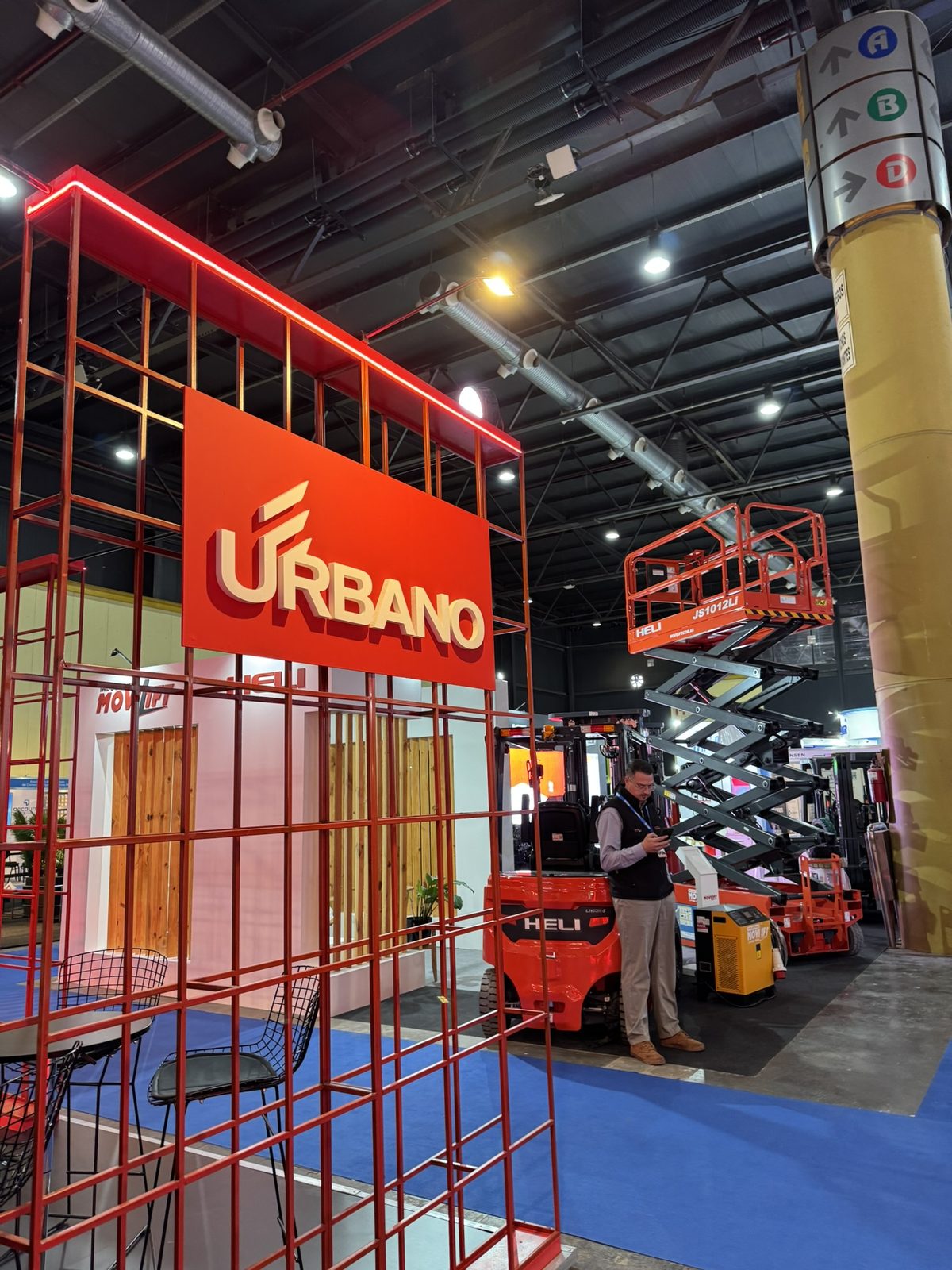
The floor shows the commercial consequence. A growing share of exhibitors no longer sell equipment outright; they sell rental, availability, uptime and hours. The moment a vendor guarantees availability rather than delivering a machine, both parties need a shared, trustworthy record of hours run, faults raised and service met. Outcome-based models cannot be settled on trust at scale — nor on one party's private database.
So what: artificial intelligence makes the promise and the shared record makes it enforceable. Deployed apart, one produces plausible fiction and the other produces well-documented disappointment. Deployed together, on the same event data, they convert a volatile operation into a foreseeable one — which is the only version of this technology an operator can put in a contract.
Three regional operators, three commitments made provable
The patterns below are composites from Socradata engagement work in the region. None begins with a model. Each begins with a commitment the business was already making badly.
Grain and oilseed exporter, Rosario corridor — origin as a shipping document. Facing the December 2026 EUDR gate, a fourteen-port exporter rebuilt origin capture: plot-level geolocation collected at intake rather than reconstructed at loading, chain of custody written to a shared tamper-evident ledger, due-diligence statements assembled from that record instead of from email. Geolocated volume rose from 31% to 94% in two harvest cycles; statement preparation fell from 9 days to 6 hours; buyer origin queries moved from 3 weeks to same-day; the discount conceded on unverifiable lots closed by 1.8 points.
CABA distribution centre, retail 3PL — the forecast that reaches the forklift. A Buenos Aires operator joined three previously separate feeds — order history, forklift telemetry from the trucks themselves, and dock appointment data — into one demand-and-slotting model, keeping human sign-off on any exception that moves a customer's promised date. Forecast error fell 24%; on-time-in-full rose 8 points to 96%; travel distance per pallet picked dropped 19%; utilisation gains deferred two truck acquisitions; and 88% of delivery dates are now promised from live capacity, not a static lead-time table.
Cold chain across Argentina, Chile and Uruguay — condition, predicted and proven. A pharmaceutical and food distributor moved from post-mortem temperature audits to a predicted-excursion model: sensor streams scored in transit, alerts raised while intervention is still possible, every excursion and its response written to a record the client and the insurer both read. Loss from thermal excursion fell 41%; mean detection moved from post-delivery to 37 minutes before breach; claims settlement shortened from 58 days to 19; and driver and consignee personal data was scoped under Ley 25.326 and LGPD before the first sensor was fitted.
Implementation: from equipment plan to operating model
The warning belongs next to the opportunity. Gartner reports that roughly 67% of supply chain digital investment now flows to artificial intelligence while 55% of chief supply chain officers remain unclear about the return, and projects that over 40% of agentic AI projects will be cancelled by end-2027 — mostly for governance and measurement failures, not model quality. Traceability has its own graveyard of consortium pilots that produced elegant ledgers nobody was obliged to consult. The technology worked; the operating model did not.
The discipline that separates production from pilot is unglamorous. Name the commitment before the tool: a date, a quantity, a condition, an origin, each with an owner and a number. Settle who owns the data before the sensors arrive — on a rented forklift, telemetry is generated by the vendor's asset inside the client's process, and contracts silent on portability create a dependency dressed as a service. Adopt one identifier and one event grammar across counterparties, because a commitment only one company can read is not verifiable: interoperability or it doesn't scale. And keep a human in the loop exactly where a machine decision changes what a customer was promised.
So what: the equipment plan is procurement and it is comparatively easy. The information plan is engineering. The commitment plan is governance. Operators who buy in that order compound; operators who buy the iron and postpone the other two are financing a faster version of the same uncertainty.
Governance
Settle data ownership, portability and retention in the equipment and 3PL contracts themselves, telemetry included. Register every automated decision that can alter a customer commitment and require human sign-off on those that do. Map one control set to the strictest bar: Ley 25.326, LGPD, EUDR due-diligence duties, EU AI Act Article 14 where a model touches a high-risk decision. Adopt GS1 and EPCIS-class standards, not a schema per partner, and keep origin evidence on a record the counterparty can read without asking permission.
KPIs
Verifiable-commitment ratio above 85% on customer-facing promises. Forecast error down at least 20% against the static lead-time baseline. On-time-in-full above 95%. Origin coverage at 100% of EU-bound volume before the December gate, statement lead time under 24 hours. Exception detection ahead of loss. Cost per pallet and energy per pallet, tracked together. Override under 8%; counterparty audit response inside one working day.
12-month roadmap
0–90: inventory the commitments made to customers and regulators, baseline the verifiable-commitment ratio, and audit what the installed equipment already emits — most operations are data-richer and integration-poorer than they assume. 90–180: unify event data on a standard grammar, put one forecast into production against a named commitment, close the EUDR origin gap. 180–360: extend the shared record to the two counterparties generating most disputes, tie one availability contract's terms to it, report quarterly.
Iron is procurement. Certainty is architecture.
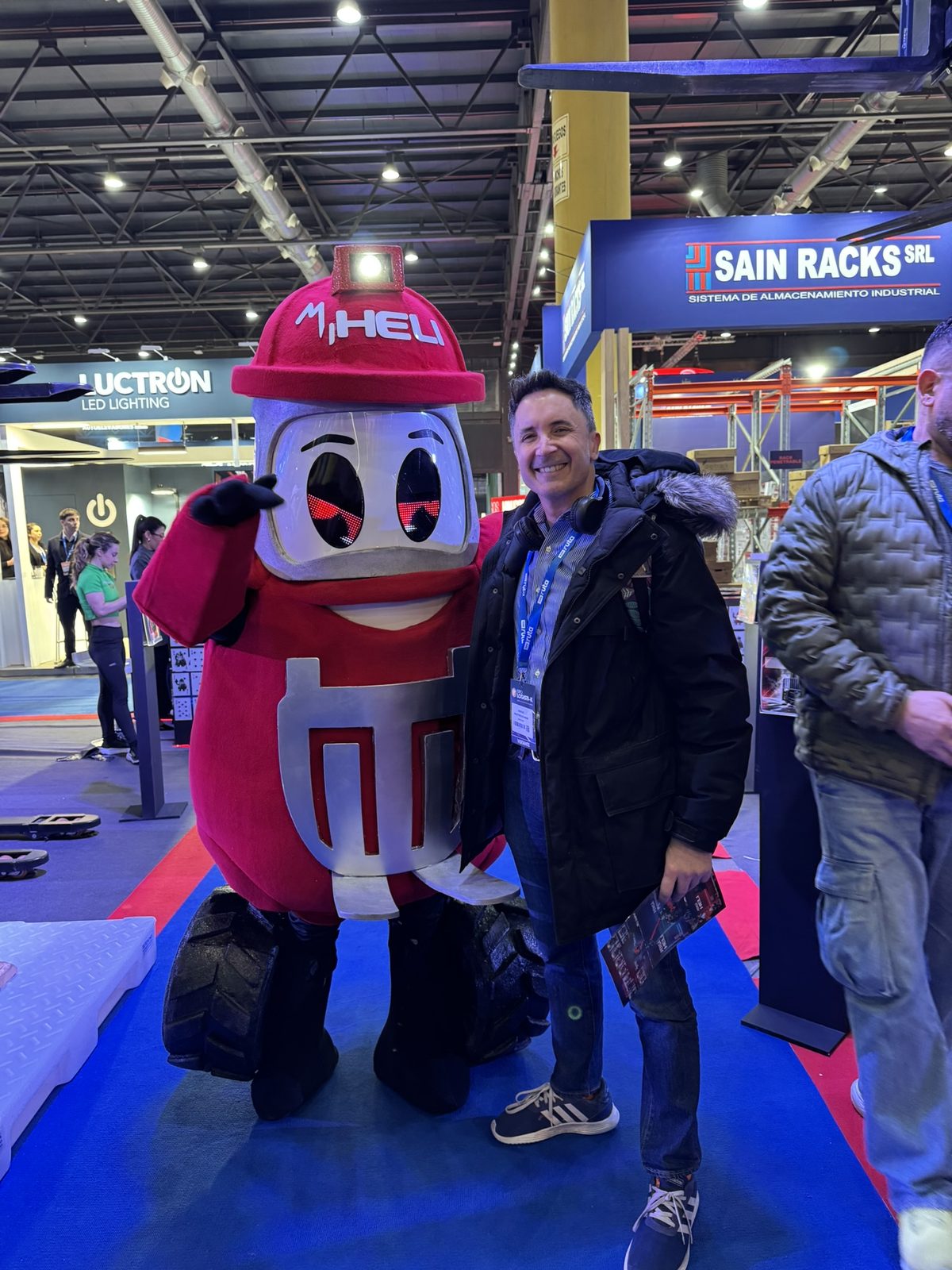
Three afternoons at La Rural are worth a quarter of market reports, because a demonstration cannot bluff. What the floor demonstrates is a sector that has learned to move things well and has not yet learned to promise things well. That is not a technology deficit — the tools were all in the building, distributed across a dozen stands that do not talk to each other. It is an operating-model deficit, and it is why a regional shipper still pays several times the OECD share of product value to reach a customer.
This is the layer Socradata works in, and the starting point is deliberately modest: identify the commitments an operation already makes, find which cannot survive a question from a counterparty, and instrument those first. Sometimes the answer is a forecasting model; often it is an integration nobody had owned, a shared identifier, or a contract clause about telemetry. The sequence matters more than the sophistication. From pilot to policy, and KPIs before APIs — because the operator who can prove a date, a quantity, a condition and an origin will win business from the one who can only assert them, with the same forklifts.
Make your commitments provable
Socradata runs Operational Diagnostics for logistics, agribusiness, retail and industrial operators across Argentina and the region: a map of the commitments your operation makes, a verifiable-commitment baseline, an audit of what your installed equipment already emits, an EUDR and data-governance gap review, and a board-ready scorecard with a phased roadmap.